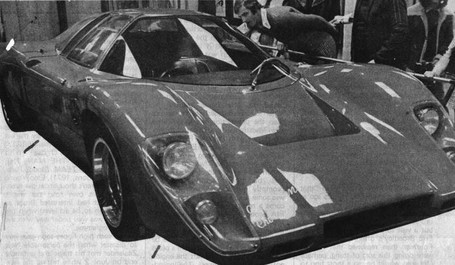
Would you buy a car if you had to persuade the dealer to put an engine in? Would you wait three years for delivery? Would you accept it without lights of any kind? Would you agree to no guarantee whatsoever? If you can answer "yes" to any of these, then you’re either an out and out nut or a very happy French Canadian named Fournier, who is the owner of an altogether unique and highly treasured means of transportation – the sole existing M12GT McLaren – a derivative of Bruce McLaren’s personal grand touring prototype that almost made it to the world’s car marts.
An attitude such as Fournier’s is scarcely representative of the masses’ choice of motoring media, for a keen interest in cars is not at all a commonplace among North American road users. Indeed, the reaction of virtually the entire car-driving population west of the Grand Banks and east of the Pacific can best be typified by that of a former employer of ours who shall remain nameless: "If I turn the key in the morning and it starts, that’s good enough for me!"
The enthusiast minority, on the other hand, has several methods of avoiding assembly-line obsolescence – designing and building their own cars, mortgaging their earthly wealth for a limited production "classic" or- the ultimate – amputating one’s right arm to acquire BMW’s Turbo, Coggriola’s Volvo, or Vega’s project XP-898. Each of these is possible, all require a modicum of knowledge (expertise even), but there is one inescapable common denominator – cash by the carload! Thankfully, there are still a few fortunates who aspire to the last avenue of vehicular "soul".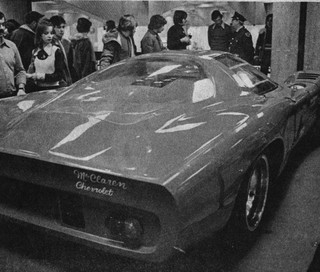 André Fournier is one member of this elite group. And he would appear to have all the necessary trappings; youth (he’s only 33), married (with two children) – though this is hardly a prerequisite – and varied business interests that include a travel agency, a dry-cleaning establishment, and Automobiles André Fournier Inc., a GM franchise dispensing Chevrolet and Oldsmobile cars, all in the city of Waterloo, about 65 miles south-east of Montreal. We rhetorically asked whether such accoutrements made paying for the upkeep of this pride and joy easier to bear! He laughingly replied: "Well, it does, naturally, but really, it’s the type of thing I like. I love cars, and, as far as that baby is concerned, paying for it hasn’t been a problem at all, because I’ve had as we say in French ‘beaucoup de plaisir" (kicks, if you will), in having it and owning it. It’s been very worthwhile."
Fournier’s involvement with "that baby" began almost four years ago as the result of a trip to the UK. He had heard that Lola were involved in project to put GT coupes on the road, but a visit to the Slough works found Eric Broadley’s offering a bit pricey. Fournier then reasoned that if Lola were doing this sort of thing, perhaps McLaren would be, so a short hop to Colnbrook commenced a bargaining session that was to last almost three years.
The first inkling that Bruce McLaren indeed had the more sporting motorist in mind appeared in the racing press in mid 1968, when it was rumoured that consideration was being given to the homologation of a coupé version of the McLaren-Elva sports racing car to compete with the Lola T70 in Group 4. The M6A had proved eminently successful in the Can-Am Series, so what better test-bed by which to assess the merits of the venture than the production line M6B?
